
There is an urgency running through the food system transformation space. The climate crisis, rising food insecurity, ecological breakdown and widening inequalities all demand, above all else, pace. In response, many of us have absorbed the directive to move fast and break things.
But when we break things, things get broken. And in food systems work, those things are often relationships, trust, and the very communities most affected by injustice. The question is no longer whether change needs to happen quickly, but how it happens – and who gets to decide the speed.
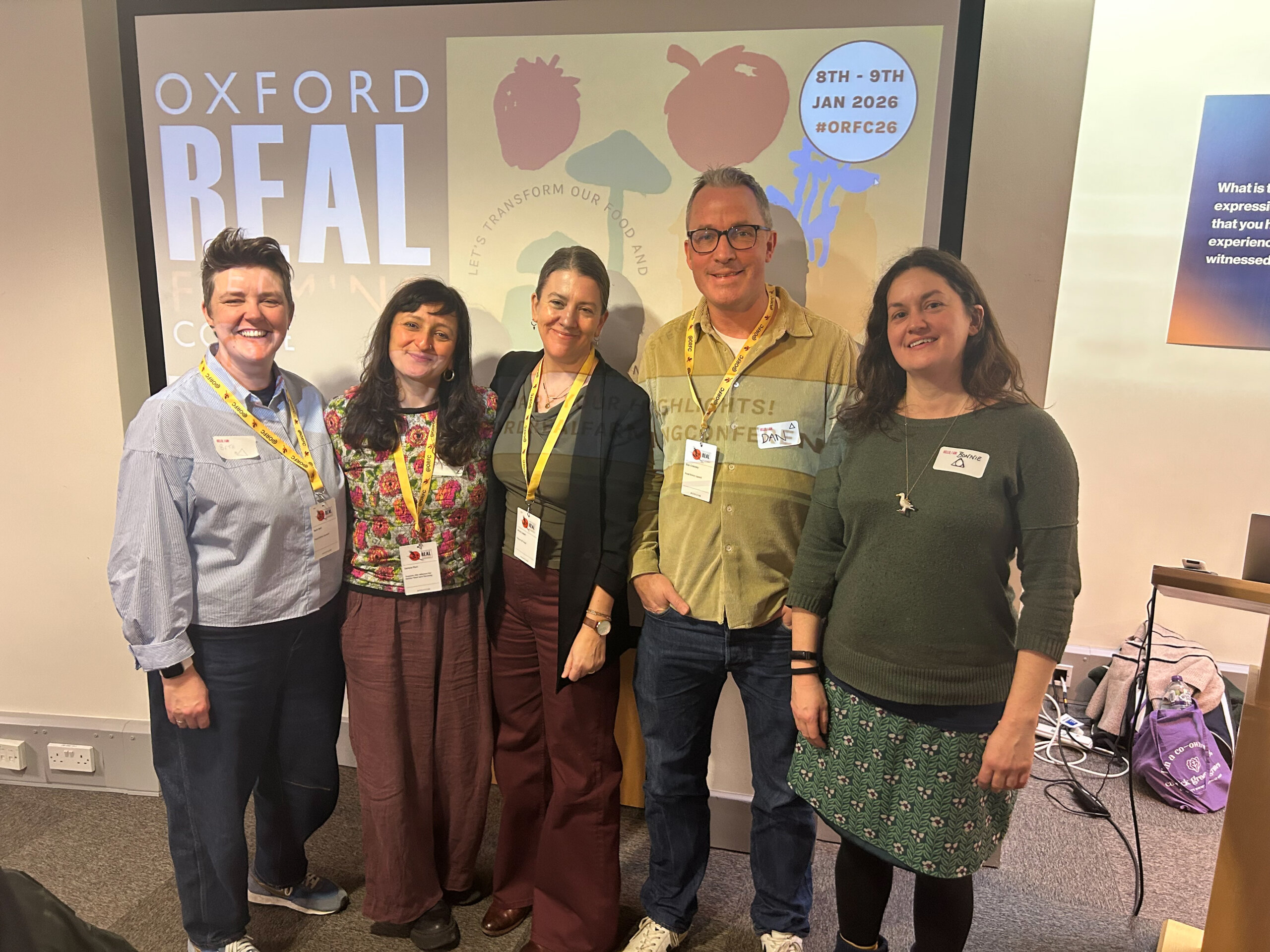
Joined by Sareta Puri (Diversity Outreach Coordinator at Sustain: the alliance for better food and farming), Bonnie Hewson (Director at Farming the Future) and Anna Lappé (Executive Director at Global Alliance for the Future of Food), we held a packed workshop at ORFC to explore a deceptively simple question: what can funders and the movement do together? The conversation revealed both the depth of shared commitment in the room and the structural tensions that continue to shape how change is resourced.
We noted the collective sense that we cannot keep doing the same things in the same ways. That is, in order for things to change, we have to change the way we do things. adrienne maree brown’s Emergent Strategy has become a touchstone for many in the movement, offering a different framing of change: one rooted in relationships, adaptation and care.
Central to that thinking is the idea of moving at the speed of trust. In the context of funding, this invites difficult but necessary reflection. Trust takes time. It requires listening, transparency and a willingness to relinquish control. And it sits uneasily with funding systems that reward speed, scale and polish over depth, care and long-term systemic work.
Drawing on Where the Green Grants Went 9 and our Food Issues Census 2024-25, we heard that we already know quite a lot about the UK food and farming funding landscape. In the session, we also heard about the Grassroots International’s Solidarity Philanthropy resource which explores how to change philanthropy from within – by funders, donors, and others in the sector – in tandem with social movements and allies.
The challenge then is not a lack of insight, but what we do with it.
Philanthropic funding remains fragmented and siloed, often poorly aligned with the systemic and interconnected nature of food system change. Organisations doing deeply relational, preventative or movement-building work are frequently forced onto a fundraising treadmill that prioritises short-term projects over long-term transformation.
Speakers from across the movement highlighted how funding landscapes are far from neutral. Decisions about what gets funded – and how – shape strategies, timelines, language and even values. Reporting requirements can become extractive. “Capacity building” can unintentionally homogenise organisations, diluting culturally specific or community-rooted approaches. Riskier, earlier-stage ideas – often where innovation and solidarity coalesce – are least likely to be supported.
At the same time, there are growing examples of funders experimenting with different approaches: Pando funding participatory grant-making, pooled funds, power transfers, lighter-touch reporting, and solidarity-based models of philanthropy. Essentially asking (demanding?) of funders to see themselves not as external benefactors, but as part of the ecosystems they seek to support.
Building on these expert insights, the workshop then used one of the Liberating Structures participatory processes (1-2-4-All) to surface the collective wisdom in the room. Designed to harness wisdom and energy in an equitable and inclusive way, 1-2-4-All is a potent prompt to remember that how we work together matters as much as what we say.

In closing, several insights were drawn together under a single word: POWER.
None of this is easy. Rebalancing power means confronting uncomfortable histories and present-day realities. It means slowing down in places, even as the crises we face accelerate. But if food systems transformation is to be just, resilient and lasting, then trust cannot be treated as a ‘nice to have’.
Perhaps the real work ahead is not learning how to move faster, but learning – together – how to move differently.